Infrared thermography for non-destructive testing and evaluation (NDT & E) aims at the detection of subsurface features (i.e. subsurface defects, anomalies, etc.), owing to temperature differences observed on the investigated surface during monitoring by an infrared camera. At temperatures above absolute zero all bodies emit electromagnetic radiation. Infrared thermography or thermal imaging is a measurement technique based on the detection of radiation in the infrared spectrum (usually in the 2-5.6 mm and 8-14 mm regions). These two spectral bands are commonly used because of their low atmosphere absorption.
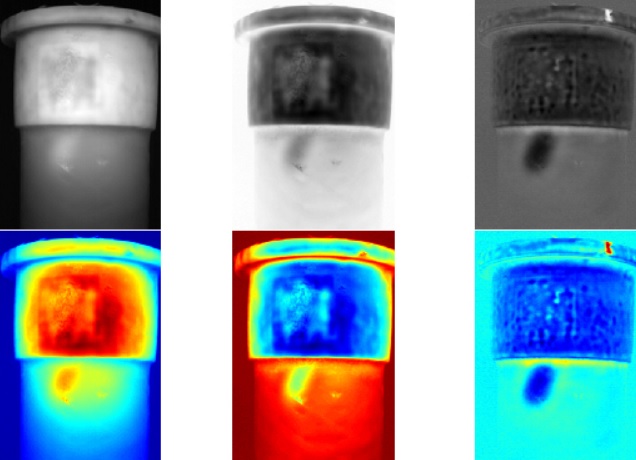
The main advantage of infrared thermography over the destructive testing techniques is that large areas can be scanned fast and with no need to be destroyed during testing. This results in major savings in time, people, work and machinery. In addition, there are advantages of infrared thermography over the other non-destructive techniques. The infrared thermographic device is risk-free, as it does not emit any radiation; it only records the infrared radiation emitted from the material that is under assessment. Moreover, infrared thermography is an area investigating technique, whereas most of the other non-destructive methods are either point or line testing methods.
Thermography, due to the fact that it uses infrared technology it is not possible to penetrate in extended depths (only a few mm’s). That of course is one of the main limitations of the technique. Finally, environmental conditions also play an important role on outdoor infrared thermographic surveys utilising the passive approach (i.e. cloud cover, solar radiation, wind speed).